
Mirissa sits on a compact crescent bay 146 km south of Colombo and roughly 35 km east of Galle, tucked just beyond Weligama on the Southern Expressway corridor. Despite years of steady development, the bay retains a character that rewards unhurried exploration: a palm-backed arc of sand, a working fishing harbour, and open ocean access that makes it one of the world's most reliable blue-whale watching points. This guide covers everything needed to plan a stay of one to several days, including honest notes on what the village has become as well as what it still offers.
Character & History
Until the early 2000s Mirissa was a functional fishing settlement with a small number of guesthouses catering to budget travellers who had exhausted Hikkaduwa or Unawatuna. The 2004 Indian Ocean tsunami caused severe damage to the southern coast, and the reconstruction period coincided with a rapid influx of small tourism businesses. Today the beach road running parallel to the bay is lined with restaurants, bars, surf shops, and guesthouses ranging from backpacker dorms to boutique villas. The fishing harbour at the western headland continues operating, and it doubles as the departure point for whale-watching vessels — one of the more tangible connections between the old economy and the new.
The village itself has a split personality: the beach-facing strip is tourism-driven, but walk a few hundred metres inland and you are among coconut smallholdings, small temples, and everyday Sri Lankan neighbourhood life. That contrast is part of Mirissa's appeal and also a reminder that the place is not a resort enclave.
Orientation & Neighbourhoods
Mirissa is small enough that orientation takes minutes. The bay runs roughly east to west. The western end, near the harbour, is where most whale-watching boats berth and where the liveliest cluster of bars and restaurants has established itself. A small rocky promontory here, sometimes called Parrot Rock, offers a view across the full sweep of the bay and is a popular sunset perch. The central beach is the main swimming zone — wide, with a gentle slope and usually manageable surf. The eastern end is quieter, merges with a headland, and is where most of the mid-range and boutique accommodation is set back from the road among gardens. The main road (A2 highway) runs parallel to the beach about 150–300 metres inland and provides the main bus and tuk-tuk corridor.
Key Sights & Experiences
Blue Whale Watching
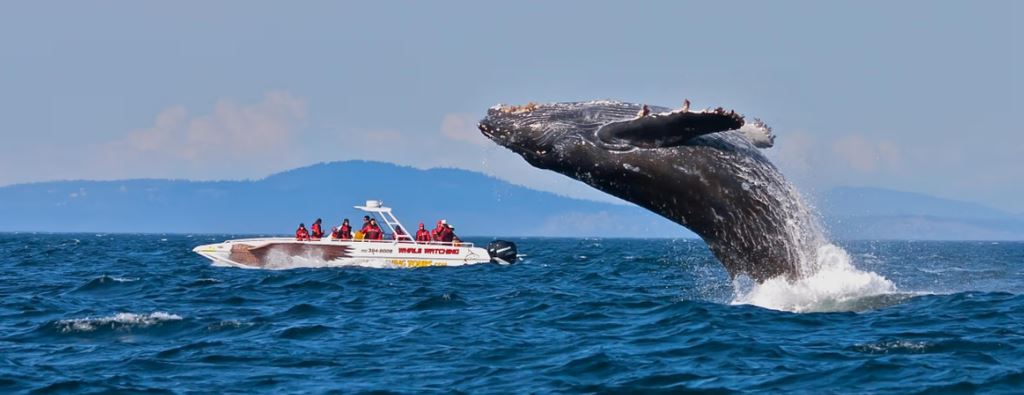
This is the experience that draws many visitors specifically to Mirissa rather than elsewhere on the coast. The submarine canyon off the southern tip of Sri Lanka concentrates blue whales and sperm whales within a few kilometres of shore, making this one of the most accessible pelagic whale-watching locations on earth. Boats leave the harbour between 06:30 and 07:00 and typically return by early afternoon; tours run four to six hours. Blue whales are reliably sighted from mid-November through to April, with December through March the peak window. Spinner dolphins are common year-round.
A few practical caveats: the industry is unregulated in terms of vessel behaviour around animals, so outcomes vary considerably depending on which operator is running your boat. Seasickness is a real factor — the channel can be choppy; ginger tablets or prescription patches taken the night before help. Prices range from approximately USD 30–55 per person depending on vessel quality and season. It is worth asking whether the boat has a spotter, carries binoculars, and has any form of shade. Going on the first departure of the day improves odds.
The Beach
The main bay is suitable for swimming for much of the year when the southern swell is calm. A surf break forms at the western end and is beginner-friendly by Sri Lankan standards. Snorkelling off the rocks at either headland produces modest coral and reef fish — not comparable to Galle's Jungle Beach or Hikkaduwa's reefs, but worthwhile on calm days. Sun beds are available from beach vendors; accepting one generally comes with an expectation to buy drinks from the adjacent shack, which is a reasonable arrangement.
Parrot Rock
This small rocky island at the western end is connected to the beach at low tide by a short wade or hop across rocks. It is a popular spot for sunset watching, though it becomes crowded in high season and the scramble across can be treacherous in flip-flops. The view back across the bay from the top is the best available.
Coconut Tree Hill
A ten-minute walk east along the beach or up a path from the road leads to a small headland planted with leaning coconut palms that has become a well-photographed landmark. Access is free and straightforward; it is busiest around golden hour.
Food & Drink
Mirissa's restaurant strip is disproportionately strong given the village's size. Seafood is predictably the focus — grilled catch-of-the-day plates, devilled prawns, and Sri Lankan-style fish curries are all done well at most competent kitchens. Rice and curry lunches at smaller inland eateries cost LKR 400–700; a grilled fish dinner on the beach strip runs LKR 1,500–3,500 depending on the catch and venue presentation.
Sri Lankan breakfast: Hoppers, string hoppers, and pol sambol are available at a handful of local cafes off the main beach road from around 07:00. Seek these out rather than relying on guesthouse toast.
Seafood grills: Most beach-facing restaurants display the day's catch on ice; pointing and negotiating the weight and cooking method is standard. Tuna, barracuda, and snapper are common; lobster appears when available at significantly higher prices.
Bar scene: Mirissa has a more active nightlife than most Southern Coast villages. Several venues play music past midnight in high season. Arrack cocktails and local Lion Lager are the affordable choices; imported spirits carry steep markups.
Fruit stands: Year-round fresh king coconuts (thambili) at LKR 80–120 each; mangoes and pineapples in season. Worth stocking up for beach days.
One honest note: the quality variance across restaurants is high. Places immediately adjacent to the busiest beach access points can be mediocre and expensive by local standards. Walking a block further from the main cluster usually finds better value.
Where to Stay
Mirissa has accommodation across a broad spectrum, and the decision is largely about position and atmosphere rather than specific properties.
Eastern headland villas and boutiques: The quietest and most characterful options are set among garden plots east of the main beach strip. These tend to have pools and more considered design, and are better suited to couples or travellers wanting to escape the evening noise of the western end.
Beach-road guesthouses: Mid-range rooms above or behind restaurants are the staple of the central strip. Convenient, social, and variable in quality — inspect before committing.
Budget guesthouses inland: Within 400–500 metres of the beach, a band of family-run guesthouses offers clean, simple rooms at LKR 3,000–6,000 per night. These represent the best value in the village and are closer to the local rhythm of life.
Weligama overspill: Weligama, 3 km west, has a broader inventory of accommodation including some larger properties; it is a viable base from which to access Mirissa by tuk-tuk for the beach and whale-watching departures.
Getting There
By Train
The Colombo–Matara coastal railway is one of the most scenic rail journeys in Sri Lanka. The nearest station is Mirissa (sometimes listed as Mirissa Halt) or the slightly larger Weligama station, 3 km west. From Colombo Fort the journey takes approximately 3.5–4 hours on an intercity express; second-class reserved seats cost around LKR 300–450. Third-class unreserved carriages are cheap but standing-room only in high season. The train is the most comfortable and scenically rewarding option and is highly recommended over the road for anyone coming from Colombo or Galle.
By Bus
Air-conditioned express buses run from Colombo Central Bus Stand to Matara, stopping at or near Mirissa junction. Journey time is roughly 3–3.5 hours via the Southern Expressway. Local buses from Galle to Matara pass through Weligama and Mirissa frequently and are the cheapest option (LKR 60–120 from Galle).
By Road
The Southern Expressway (E01) from Colombo reaches Pinnaduwa junction near Galle in under two hours; from there the A2 coast road continues to Mirissa in a further 30–40 minutes. Taxis from Colombo run approximately USD 55–75 depending on vehicle and negotiation.
Getting Around
Mirissa is walkable end to end in under 25 minutes. Tuk-tuks are available for hire to Weligama (LKR 250–400), Matara (LKR 700–900), and Tangalle (LKR 1,500–2,000). Bicycles and scooters can be rented from several shops along the beach road at LKR 1,000–1,500 per day for a scooter; a valid driving licence is technically required and road discipline on the A2 warrants genuine attention.
Practical Tips
Money: ATMs are available in Weligama (more reliable than Mirissa village itself). Carry sufficient cash for restaurants and tuk-tuks; card acceptance is improving but inconsistent.
Safety: Rip currents can form at both ends of the bay; swim in the central flagged zone and heed any warnings from beach vendors. Petty theft from beach bags is occasional; do not leave valuables unattended.
Tuk-tuk pricing: Agree the fare before boarding. Metered rides are rare on the south coast.
Connectivity: Mobile data (Dialog, Mobitel, Hutch SIMs) is reliable throughout. Most guesthouses and restaurants offer Wi-Fi.
Dress and etiquette: Beachwear is acceptable on the beach and at beach restaurants; cover up when entering the village, visiting any temple, or travelling by public bus.
Scams: Gem shops and "special offers" on the road to Galle are worth avoiding. Whale-watching touts on the beach may quote lower prices than the actual boat; confirm costs directly at the harbour the evening before departure.
Suggested Itineraries
One Day
Arrive by the morning train from Galle. Walk the beach, swim from the central section, climb to Coconut Tree Hill for the view, and lunch on grilled fish at a central beach restaurant. Spend the afternoon at Parrot Rock for sunset, then dinner at a seafood kitchen on the western strip.
Two Days
Day one as above. Day two: join a whale-watching departure at 06:30 and return by midday. Spend the afternoon recovering with a walk inland through the village, seeking out a local rice and curry lunch. Evening at leisure.
Three Days
Add a day trip to Galle Fort (35 km, 40 minutes by train) for the Dutch colonial architecture and rampart walks, or head inland towards Udawalawe National Park (approximately 90 km north) for a morning safari and elephant sightings before returning to the coast in the evening.
Day Trips & Onward Travel
Weligama (3 km west) is worth an hour for its stilt fishermen, surf lessons on a long beginner-friendly break, and calmer bay swimming. Matara (18 km east) has a Dutch fort, the Polhena reef snorkelling site, and more practical urban amenities. Tangalle (45 km east) offers a quieter beach alternative if Mirissa feels too developed. For a multi-day extension heading north, the hill country is accessible via Matara–Wellawaya–Ella road, making Ella a logical next stop combining coast with highlands. Travellers building a fuller Sri Lanka circuit might continue to Kandy or even Sigiriya before or after the south coast leg.